
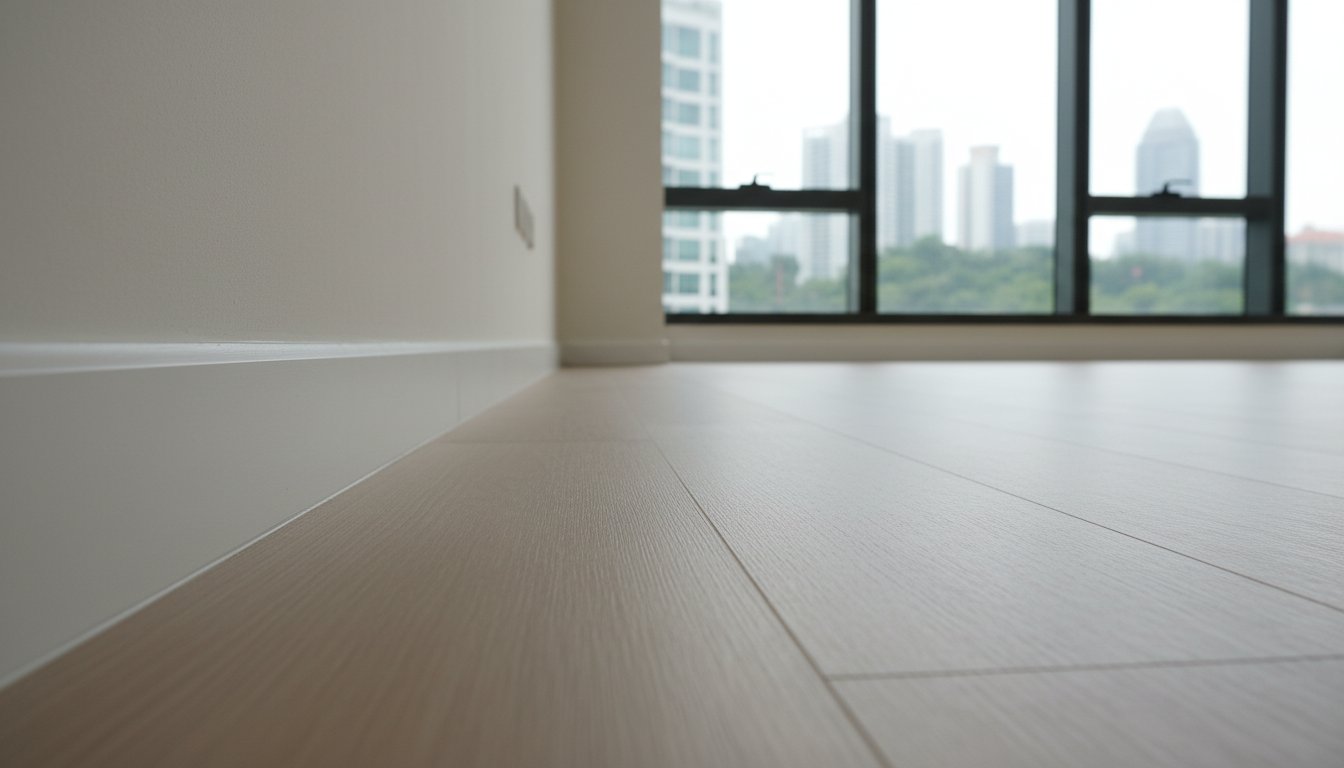
Why would a homeowner invest over S$12,000 in premium flooring only to let a few centimeters of timber compromise the entire aesthetic? You’ve likely realized that the smallest details often define the luxury of a space. However, in Singapore’s 84% average humidity, traditional wood options often fail. That is why choosing the right floor skirting is the essential final step to ensure your home remains a stunning masterpiece for years to come.
It’s frustrating to see beautiful interiors marred by rotting boards or termite infestations within just 36 months of a renovation. We believe your home deserves a flawless finish that stands the test of time. Discover how to select the perfect skirting boards to bridge the gap between your premium floors and elegant walls while ensuring long-lasting performance. This guide explores waterproof, termite-proof solutions that eliminate visual clutter and provide a sophisticated, high-end look for every room.
Key Takeaways
- Understand how premium skirting serves as a sophisticated transition that protects walls from moisture while elegantly concealing essential expansion gaps.
- Compare high-performance materials like waterproof PVC and termite-proof aluminum to ensure your interior solutions withstand Singapore’s humid climate.
- Master the design principles of choosing the right floor skirting to either visually expand your room or achieve a modern, minimalist look.
- Apply the professional 1:20 ratio rule to select the ideal skirting proportions that perfectly balance your ceiling height and room size.
- Discover how to adopt “System Thinking” to integrate your flooring with the perfect accessories for a seamless and flawless finish.
The Essential Role of Floor Skirting in Modern Interiors
Every premium interior begins with a vision of seamless elegance. Floor skirting serves as the critical transition between the horizontal plane of your floor and the vertical rise of your walls. It’s the silent protector of your home’s aesthetic. When What is a Baseboard? is defined technically, it’s often described as a simple molding; however, in a modern Singaporean context, it represents the intersection of durability and design. Choosing the right floor skirting involves understanding how this single element anchors an entire room while providing a sophisticated finish.
Walls face constant threats from daily maintenance. Wet mops introduce moisture that can seep into plaster, while heavy vacuum cleaners cause scuffs and chips. A high-quality skirting board acts as a buffer. It also hides the 3mm to 5mm expansion gaps necessary for LVT and laminate flooring to breathe. Without this gap, floors can buckle during Singapore’s high-humidity months, leading to costly repairs that might exceed S$1,200 for a standard living room. By concealing these gaps, skirting ensures your floor remains a stunning masterpiece without compromising its structural integrity.
The industry has seen a significant evolution in materials over the last decade. Historically, timber was the standard for Singaporean HDBs and private condos. By 2022, the market shifted toward resilient materials like high-density polymers and SPC. These modern solutions offer waterproof properties that traditional wood cannot match. They don’t warp, they don’t rot, and they resist termites, making them the perfect foundation for any space. This shift allows homeowners to achieve a flawless look that stands the test of time.
Why Skirting is Non-Negotiable for Luxury Flooring
Luxury flooring requires a professional finish to maintain its premium status. Beyond aesthetics, skirting prevents mechanical damage from furniture legs and cleaning equipment. It conceals the rough edges of floor planks, ensuring a flawless transition. For homeowners choosing the right floor skirting, selecting a material that matches the floor’s resilience is vital. It creates a visual frame that transforms a simple floor into a curated design statement, providing long-lasting performance in high-traffic areas.
The Psychology of a Finished Space
A room without skirting feels unfinished and raw. In the competitive Singapore property market, small details drive big impressions. Real estate experts often note that high-quality finishing touches can increase a property’s perceived value by 3% to 5%. Skirting provides a sense of completion and premium quality that resonates with discerning buyers. It frames the floor, drawing the eye across the room and highlighting the quality of the materials used. It’s the final touch that signals a home has been designed with care and precision.
Modern interiors in 2024 prioritize clean lines and low-maintenance luxury. The transition from timber to resilient materials isn’t just a trend; it’s a response to the practical demands of urban living. High-density polystyrene and SPC skirting have become the gold standard for modern homes. They provide a sleek, contemporary look that complements the minimalist styles favored in recent renovation projects across the island. By integrating these solutions, you ensure your home remains both stylish and durable for years to come.
Choosing the Right Material for Durability and Performance
In Singapore’s tropical climate, choosing the right floor skirting is more than an aesthetic decision. It’s a functional necessity. With average relative humidity levels hovering around 84%, standard materials often succumb to moisture damage within 24 months of installation. You need a solution that balances sophisticated design with resilient, long-lasting performance. Selecting the wrong material leads to visible warping, peeling, and expensive replacements that disrupt your lifestyle.
PVC Skirting: The Modern Versatile Choice
High-quality PVC is the gold standard for modern residential interiors. It’s 100% waterproof and entirely termite-proof, making it the perfect foundation for any space. Unlike traditional options, premium PVC from Nature Living Floor doesn’t require sanding, sealing, or painting. It stays flawless for decades. You can discover elegant wood-grain textures that mimic white oak or walnut, or opt for minimalist flat colors that blend into a contemporary wall. The installation is clean and fast, ensuring your home transformation is effortless.
Aluminum Skirting: Sleek, Industrial, and Indestructible
Aluminum offers a slim, 10mm profile that effectively prevents dust accumulation on top edges. It’s the ultimate choice for high-traffic commercial zones or humid enclosed balconies. It provides a sharp, industrial edge that complements modern loft designs perfectly. Because it’s a non-porous metal, it’s immune to the rot and mold that often plague Singaporean households during the monsoon season. This material is practically indestructible, resisting scratches from vacuum cleaners and heavy furniture movement.
The Pitfalls of Traditional Timber and MDF
Many homeowners fall into the “Termite Trap” by installing traditional timber. Raw wood is the primary food source for subterranean termites, which cause over S$40 million in property damage annually across Singapore. Skirting is often the first point of entry for these pests because it sits at the junction of the floor and wall. MDF is equally risky in our climate. When exposed to routine floor mopping or ambient humidity, MDF can swell by up to 25% of its original thickness. Paper-wrapped versions typically begin to peel at the edges within 3 years, compromising your home’s premium feel.
- Water Resistance: PVC and Aluminum offer 100% protection, while MDF absorbs moisture and warps.
- Termite Proofing: Synthetic and metal options are immune to infestations that destroy timber.
- Maintenance: Nature Living Floor accessories require only a damp cloth for cleaning, unlike wood which needs periodic restaining.
- Cost Efficiency: While MDF costs S$5 to S$8 per meter, premium PVC at S$12 to S$18 per meter saves you thousands in long-term repair costs.
When you’re choosing the right floor skirting, prioritize materials that can withstand the specific environmental pressures of Southeast Asia. Investing in high-performance materials ensures your interior remains a stunning masterpiece without the stress of constant maintenance. Discover how our premium flooring solutions provide the durability your home deserves. By avoiding the common mistakes of using untreated timber or low-grade MDF, you protect your investment and maintain a sophisticated atmosphere for years to come.
Aesthetic Strategies: Matching vs. Contrasting Your Skirting
Deciding on a visual strategy is the most critical step in choosing the right floor skirting for your Singapore home. Your choice dictates whether the room feels expansive, cozy, or architecturally bold. Most designers in Singapore’s high-end residential sector follow one of three primary paths: matching the floor, matching the wall, or creating a deliberate contrast. Each method serves a specific functional purpose beyond simple decoration, influencing how light and shadow interact with your living space.
The Case for Perfectly Matched Skirting
Matching your skirting to your Luxury Vinyl Resilient Floor (LVRF) is a classic technique to maximize perceived space. By using the same wood-grain pattern and texture, you extend the visual floor plane vertically up the wall. This trick makes a standard 90-square-meter HDB flat feel significantly larger because the eye doesn’t stop abruptly at the floor’s edge. To avoid a “near-miss” color clash, always source skirting from the same manufacturer as your LVRF. Even a 5% difference in undertone can make the pairing look accidental rather than intentional, ruining the seamless flow.
White Skirting: The Universal Design Solution
White remains the most popular choice for Singaporean homeowners because it acts as a crisp, clean border. It frames your walls like a piece of art and provides a neutral base that complements any floor color, from light oaks to deep walnuts. However, you shouldn’t just grab any white paint. It’s vital to match the temperature of your white skirting to your door frames and window trims. A cool, bluish-white skirting against a warm, creamy wall creates a jarring disconnect. Aim for a 100% match in sheen and tone to maintain a sophisticated, cohesive look throughout the property.
This principle of cohesion extends to other architectural details. For example, high-quality plantation shutters from a specialist like Shutters Factory can be perfectly matched to white skirting and trims to create a harmonious, high-end look.
Coordinating with WPC Wall Panels
Modern Singaporean interiors frequently feature textured surfaces like WPC (Wood Plastic Composite) wall panels. When you have a fluted or 3D textured wall, your skirting needs to provide a clean, stable transition. Use a flat, low-profile skirting to balance the high-detail texture of the panels. This prevents the base of the wall from looking cluttered or overly busy. If you’re planning a major renovation, explore these Lounge Room Feature Wall Ideas for 2026 to see how premium skirting anchors a bold vertical design without competing for attention.
If you want to make a strong architectural statement, consider a bold contrast. Black or charcoal skirting against light grey walls creates a sharp, modern frame that defines the room’s perimeter. This approach works best in spaces with higher ceilings, such as older walk-up apartments or colonial-style bungalows. When choosing the right floor skirting for a room with a feature wall, the skirting should typically match the main floor or the wall’s primary color. Introducing a third color at the floor level often creates visual clutter. Stick to these rules to ensure your home feels like a curated masterpiece:
- For small rooms: Match the skirting to the floor to “stretch” the ground area.
- For minimalist aesthetics: Match the skirting to the wall color to make the transition disappear.
- For traditional elegance: Use high-profile white skirting to create a classic “picture frame” effect.
- For textured walls: Use simple, flat profiles to avoid clashing with fluted or ribbed panels.
Ultimately, the skirting serves as the handshake between your vertical and horizontal surfaces. It hides the necessary expansion gaps required for LVRF and WPC installations while providing a durable barrier against vacuum cleaners and mops. By selecting a strategy that aligns with your floor’s performance and your wall’s personality, you create a foundation that is both resilient and remarkably stylish.
Mastering Proportions: Ceiling Height and Room Size
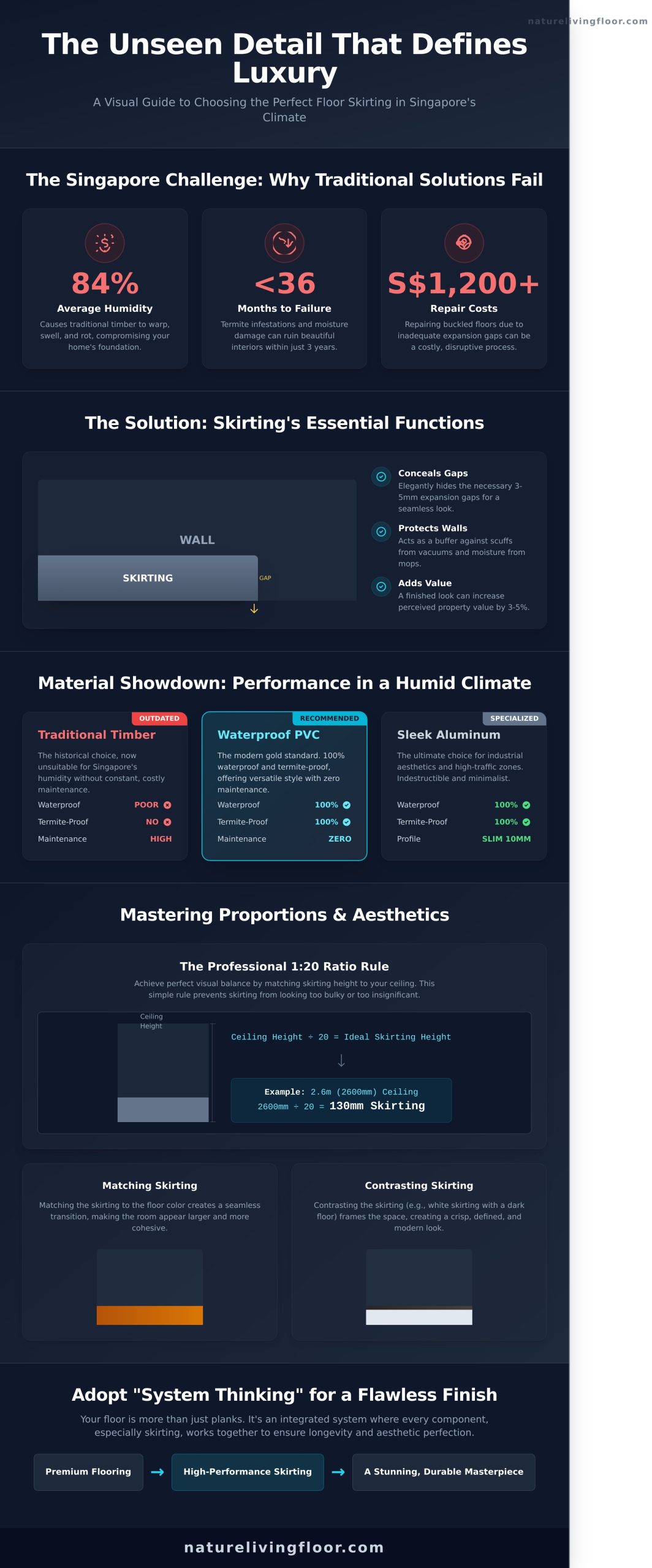
The secret to a flawless interior lies in the math. Designers often use the 1:20 ratio as a baseline for choosing the right floor skirting. In a standard Singapore HDB flat with a 2.6m ceiling, this formula suggests a 130mm profile. However, modern aesthetics in 2024 lean toward a sleeker 1:30 ratio to create a feeling of airy openness. Visual weight is the vital factor here. A skirting that’s too short for a high-ceilinged landed property looks like a budget afterthought. Conversely, a profile that’s too tall in a compact 2-bedroom condo can make the walls feel compressed and the floor space smaller than its actual square footage.
Don’t believe the common myth that large skirting only works in massive rooms. A taller 100mm skirting in a small study can actually add a sense of architectural permanence and premium luxury. It defines the boundary of the room with confidence. The trick is ensuring the profile isn’t too thick. Keeping the depth under 12mm prevents the skirting from eating into your precious floor area while still providing that sophisticated look. In many Singaporean renovations, homeowners are moving away from the “invisible” look toward bold, intentional proportions that frame the room like a piece of art.
For HDB and Condo layouts common in areas like Punggol or Queenstown, you must account for the specific wall lengths. Long, unbroken walls in an open-concept living room can handle a taller, more decorative profile. In contrast, choppy hallways with multiple doorways benefit from a consistent, mid-sized height to avoid a cluttered visual rhythm. It’s about finding a balance that respects the vertical volume of your home while complementing the horizontal flow of the floor plan.
Finding the Sweet Spot: Sizing Guidelines
Standard HDB and condo units with 2.4m to 2.6m ceilings benefit most from 60mm to 80mm profiles. These dimensions provide a clean transition without dominating the vertical space. For landed homes or penthouses with 3m ceilings, 100mm to 150mm profiles create the necessary elegance. Remember that thickness affects your furniture placement. A 15mm thick skirting creates a larger gap behind wardrobes than a slim 9mm version, which can lead to dust accumulation or the need for custom carpentry adjustments.
Visual Tricks for Small Spaces
To make a small bedroom feel taller, use a low-profile 50mm skirting and color-match it to your wall. This trick hides the boundary and draws the eye upward, making a standard 2.6m ceiling feel significantly higher. For a high-end, modern look, consider a recessed “Shadowline” profile. It creates a 10mm gap between the wall and floor, making the wall appear to float. This is the ultimate premium solution for minimalist Singaporean homes looking for a sophisticated edge. If you want to elevate your space,
to find the perfect match for your home’s proportions.
When choosing the right floor skirting, always consider the expansion gap of your primary floor material. Most vinyl and laminate floors in Singapore require a 5mm to 8mm gap from the wall to allow for thermal expansion in our humid climate. Ensure your chosen skirting thickness is at least 10mm to 12mm to cover this gap completely. This functional requirement often dictates the minimum thickness, but the height remains a purely stylistic choice that defines the character of your living space.
Implementation: Achieving a Flawless Finish with Nature Living Floor
Before you commit to a purchase, a meticulous audit of your architectural layout is vital. Precision matters in interior design. Walk through your home and measure the exact perimeter of every room, then subtract the width of door frames and floor-to-ceiling cabinetry. The final step in choosing the right floor skirting involves adding a 10% buffer for cutting wastage. This ensures you won’t run short during the critical final stages of your renovation. In Singapore’s typical HDB or BTO layouts, walls aren’t always perfectly straight. Identifying these irregularities early allows you to select flexible PVC options that mask structural imperfections rather than highlighting them.
Adopting a “System Thinking” approach transforms a simple renovation into a sophisticated design statement. This means you don’t view your flooring in isolation. Your Luxury Vinyl Resilient Flooring (LVRF) must work in harmony with your PVC skirting and aluminum trims. If you’ve chosen a 5mm LVRF plank, ensure your skirting thickness provides enough coverage for the mandatory 5mm to 8mm expansion gap. This integrated approach prevents the floor from buckling during temperature shifts, protecting your investment for the next 15 to 20 years.
Investing in professional-grade accessories is the hallmark of a savvy homeowner. While budget alternatives might save you S$100 today, they often fail within twenty-four months due to adhesive breakdown or impact damage. High-quality aluminum transitions and moisture-resistant PVC profiles provide the durability needed for high-traffic areas. These components act as the perfect foundation for any space, ensuring that the transition between your walls and floors remains seamless and elegant through years of daily use.
The Nature Living Advantage
Our curated range of premium flooring accessories reflects a commitment to modern refinement. We’ve engineered our PVC range to be 100% waterproof and termite-proof, making it a stylish and durable solution for the tropical climate. With dedicated experience centers in Singapore, Klang, and Yangon, we provide local expertise and immediate support. This regional presence ensures that every “Winter Collection” or “Summer Collection” series you select is backed by a brand that understands local building requirements and aesthetic preferences.
Installation Tips for a Pro Finish
A flawless finish relies on technical execution. Always insist on mitered corners; cutting skirting boards at a 45-degree angle creates a continuous, sophisticated line that butt joints simply cannot match. For moisture-prone areas like kitchens or entryways, use high-tack polymer adhesives instead of standard construction glue to prevent lifting. These small details elevate a standard room into a stunning masterpiece. To get started, complete your space with our premium flooring solutions and experience the difference that expert-grade materials make.
Final Project Checklist:
- Confirm all skirting boards share the same batch number to ensure color consistency.
- Verify that the chosen profile height doesn’t obstruct low-hanging electrical sockets.
- Check that all aluminum trims are flush with the floor to prevent tripping hazards.
- Ensure the expansion gap is fully covered by the skirting thickness without pinching the floor.
- Inspect mitered joints for gaps and apply color-matched filler where necessary for a monolithic look.
Elevate Your Interior with Professional Precision
Your journey toward a refined home doesn’t end with the floor planks. It’s the final details that define the quality of your renovation. You’ve discovered that choosing the right floor skirting requires a strategic approach to both material performance and visual proportions. In Singapore’s tropical climate, where humidity regularly hits 80%, our 100% waterproof and termite-proof PVC materials offer a resilient alternative to traditional timber. These solutions ensure your home remains elegant without the risk of warping or rot over time. By selecting styles expertly curated for Singapore and Malaysia homes, you achieve a seamless integration with Luxury Vinyl Resilient Floor (LVRF). This effectively masks the 5mm to 8mm expansion gaps required for a stable installation while adding a sophisticated touch. It’s the perfect foundation for any space, combining beauty with long-lasting performance. Start your project today by browsing our premium collections to find the ideal match for your modern lifestyle.
Explore Our Premium Flooring Accessories and Skirting Solutions
We’re ready to help you create a stunning masterpiece that stands the test of time.
Frequently Asked Questions
Should skirting be lighter or darker than the floor?
Matching the skirting to your wall color creates an illusion of height, but choosing a shade two to three tones darker than your flooring creates a bold, modern frame for the room. For a seamless transition, match the skirting exactly to your floor planks. This creates a waterfall effect that makes the floor area appear 10% larger in compact Singaporean apartments.
Is PVC skirting better than MDF for homes in Singapore?
PVC skirting is superior for Singapore’s high humidity levels because it’s 100% waterproof and termite-proof. While MDF is cost-effective, it often swells by 15% to 20% when exposed to moisture or mopping. PVC options provide a premium, wood-like finish without the risk of warping. You’ll save money on replacements over a 10-year period by choosing resilient PVC or SPC materials.
How do I choose skirting for a room with WPC wall panels?
Choose a skirting that matches the texture or color of your WPC wall panels to create a flawless, integrated look. Most designers recommend a recessed or flush skirting profile when working with 12mm thick wall cladding. This ensures the transition between the vertical panel and the floor remains clean. When choosing the right floor skirting for these premium wall solutions, select a minimalist profile to avoid visual clutter.
Can I install floor skirting myself or do I need a professional?
You can install skirting yourself if you have a miter saw and high-strength adhesive, but professional installation ensures 100% gap-free corners. Professional installers in Singapore typically charge between S$5 to S$12 per foot for labor. They use specialized tools to handle complex 45-degree joins and uneven wall surfaces. For a sophisticated finish that protects your investment, hiring an expert is the most reliable choice.
What is the best skirting height for a standard 2.6m ceiling?
A skirting height of 75mm to 90mm is ideal for the standard 2.6-meter ceiling found in most HDB flats. This proportion follows the rule of tenths, where the skirting occupies roughly 3% to 4% of the total wall height. If you choose a profile taller than 100mm, it can make a standard room feel compressed. Stick to 80mm for a modern, balanced aesthetic that complements your interior proportions.
How do I clean and maintain my floor skirting?
Clean your skirting once a week using a dry microfiber cloth or a vacuum with a soft brush attachment to remove dust. For stubborn scuffs on PVC or SPC skirting, use a damp cloth with a pH-neutral cleaner. Don’t use abrasive scrubbing pads that can scratch the premium finish. Regular maintenance prevents the buildup of 95% of household allergens that typically settle in the corners of your rooms.
Does floor skirting help with soundproofing?
Floor skirting provides a minor acoustic benefit by sealing the perimeter gap between the floor and the wall. This seal can reduce noise leakage between rooms by approximately 2 to 3 decibels. While it isn’t a primary soundproofing solution, it prevents vibrations from traveling directly into the wall structure. Use a flexible acoustic sealant behind the skirting during the installation process for the best results.
Can I use vinyl flooring as skirting?
You can use vinyl flooring strips as skirting by cutting them to size and finishing the top edge with a PVC L-profile trim. This is a popular design trend in Singapore that ensures a 100% color match with your floor. Choosing the right floor skirting often involves this method when specific matching profiles aren’t available. It’s a durable solution that resists moisture and provides a sleek, modern appearance.


