
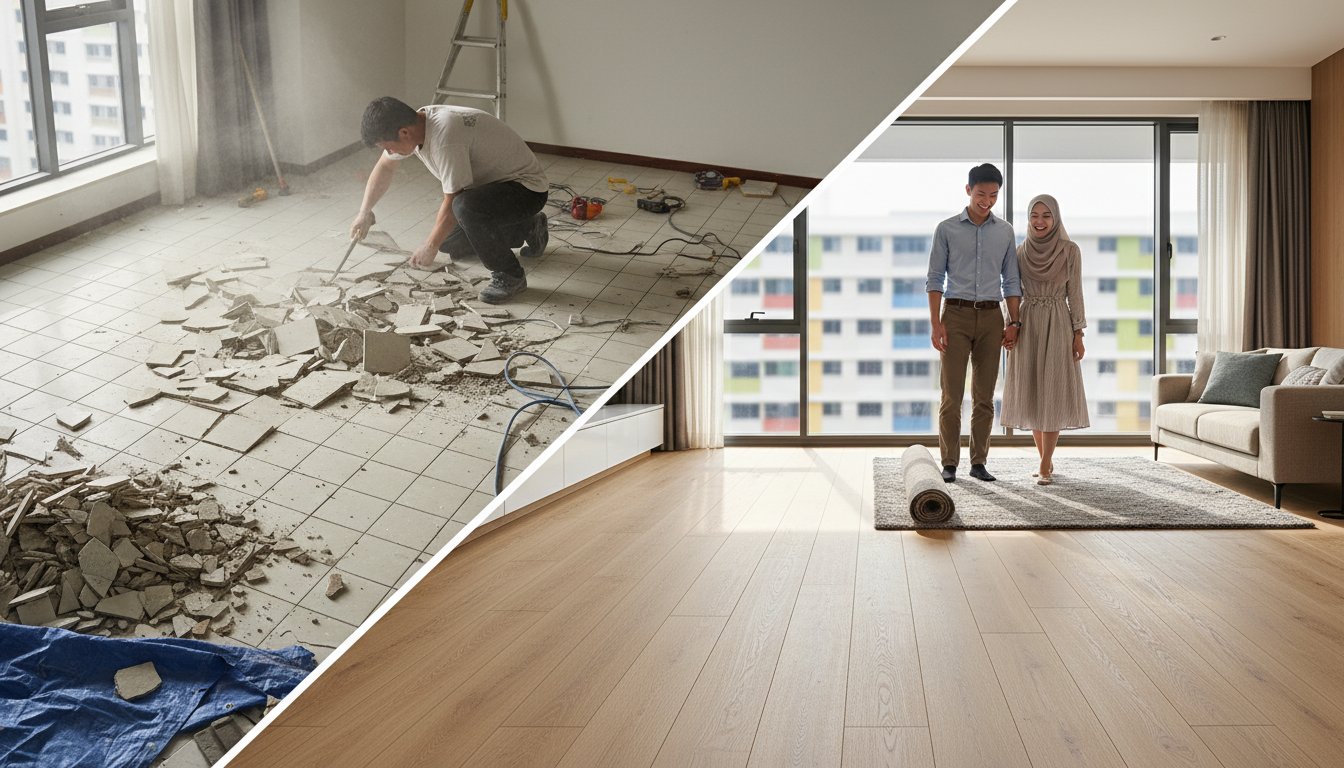
What if the most expensive part of your Singapore home renovation isn’t the elegant new surface, but the S$4,000 you spend just to destroy your current floor? You likely dread the thought of ten days of ear-piercing drills, thick clouds of dust, and the S$60 to S$120 per square meter price tag that comes with traditional hacking. It’s natural to feel anxious about the risk of “popping” tiles or termite infestations in our humid tropical climate. You deserve a flawless, premium finish that doesn’t involve weeks of domestic chaos.
Discover the most cost-effective and stylish way to transform your space by comparing hacking tiles vs overlay flooring. We’ll show you how modern premium overlay solutions provide a resilient, waterproof foundation that combines beauty with long-lasting performance. This guide explores how you can achieve a sophisticated look while reducing renovation downtime by 75% and making a smart investment that elevates your property’s value for 2026 and beyond.
Key Takeaways
- Understand the core differences between traditional renovation and modern overlays to create the perfect foundation for your sophisticated Singapore home.
- Identify the critical red flags and hidden S$ costs-such as haulage and cement screeding-that make hacking a necessary but significant investment.
- Discover why premium Luxury Vinyl Resilient Floor (LVRF) is the modern choice for homeowners seeking a flawless, waterproof, and stylish finish without the debris.
- Evaluate your renovation priorities using our 5-point matrix to finally decide between hacking tiles vs overlay flooring based on speed, budget, and durability.
- Learn how to elevate your interior design with curated flooring solutions that seamlessly combine timeless elegance with long-lasting performance.
The Great Flooring Dilemma: Hacking Tiles vs. Overlay Flooring
Choosing the right surface is the most critical decision in any Singapore home renovation. At Nature Living Floor, we believe the right choice serves as the perfect foundation for any space, setting the stage for every piece of furniture and every moment of daily life. For the 22,979 homeowners who purchased HDB resale flats in 2023 alone, the debate over hacking tiles vs overlay flooring is almost always the first major hurdle. This choice dictates your renovation budget, your move-in timeline, and even the environmental footprint of your home project.
The decision isn’t merely about aesthetics. It’s a balance between a total structural reset and a sophisticated, modern upgrade. While one path offers a clean slate, the other provides a seamless, efficient transformation. Understanding the logistical weight of these methods is essential for any design-savvy homeowner looking to combine beauty with long-lasting performance. Whether you’re aiming for a minimalist Scandi vibe or a premium, sophisticated look, your choice here defines the project’s success.
What is Tile Hacking?
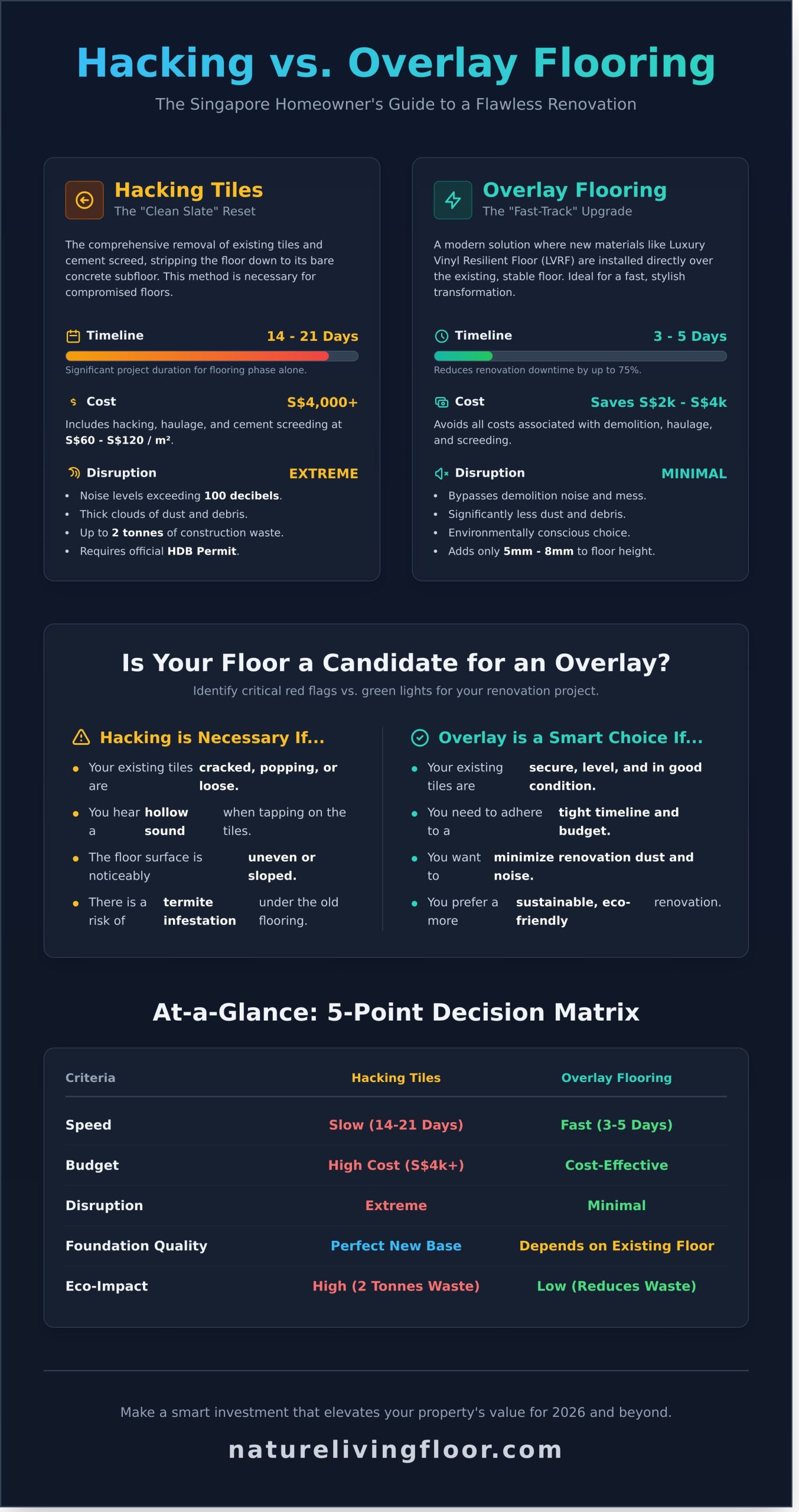
Tile hacking is the comprehensive, mechanical removal of existing floor finishes. This process involves heavy-duty pneumatic drills to break apart ceramic or homogenous tiles and the underlying cement screed. It’s a labor-intensive method that literally strips the home back to its bare concrete subfloor. Most homeowners choose this “Clean Slate” philosophy when the existing tiles are hollow, cracked, or uneven, as these issues can compromise any new layer added on top.
In Singapore, hacking isn’t a DIY job. It requires a specific HDB Renovation Permit and must be performed by HDB-registered contractors. The logistical impact is significant. A standard 4-room flat renovation can generate up to 2 tonnes of construction waste, requiring professional disposal services. You’ll also need to account for noise levels exceeding 100 decibels and a timeline that often spans 14 to 21 days just for the flooring phase. Despite the mess, it allows for a flawless, level finish from scratch, ensuring your premium flooring has a perfectly stable base.
What is Overlay Flooring?
Overlay flooring is the “Fast-Track” solution for modern interiors. Instead of destroying the old floor, contractors install new, high-performance materials directly over existing tiles. This method has gained massive popularity because it bypasses the need for intensive hacking permits and avoids the dust associated with demolition. It’s a sophisticated way to achieve a premium look without the three-week wait. Most overlay projects are completed in just 3 to 5 days, depending on the total floor area.
Common materials for this method include Stone Plastic Composite (SPC) and Luxury Vinyl Resilient Floor (LVRF). These solutions evolved from traditional Vinyl composition tile (VCT), which has been used in commercial and residential settings for decades due to its durability. Today’s modern overlay options offer far superior aesthetics, mimicking natural wood or stone with stunning accuracy. When considering hacking tiles vs overlay flooring, many choose the latter for its cost-effectiveness, typically saving homeowners between S$2,000 and S$4,000 in labor and disposal fees. It’s a smart, resilient choice for those who value both style and efficiency.
To help you decide which path aligns with your vision, consider these primary factors:
- Structural Integrity: If your current tiles are popping or “hollow,” hacking is mandatory. If they’re sound, overlaying is a viable, elegant solution.
- Floor Height: An overlay adds roughly 5mm to 8mm to your floor height. You might need to trim the bottom of your doors by a few millimeters.
- Budget Allocation: Hacking and re-screeding costs roughly S$7 to S$12 per square foot, whereas premium overlay solutions often start at a more accessible price point.
- Sustainability: Overlaying significantly reduces landfill waste, making it the more environmentally conscious choice for eco-friendly renovations.
By selecting the method that fits your lifestyle, you ensure your home remains a stylish, durable sanctuary for years to come.
The Hacking Process: When a Total Reset is Your Only Option
While an overlay offers speed, a total reset provides the flawless foundation required for a truly sophisticated home. Choosing between hacking tiles vs overlay flooring often comes down to the health of your existing subfloor. If the base is compromised, any new material you place on top will eventually fail, ruining your investment.
Structural Integrity and “Popping” Tiles
Singapore’s tropical humidity, which frequently exceeds 80 percent, puts immense pressure on tile adhesives. When tiles expand and lose their grip, they “pop” or buckle, creating a dangerous and unsightly surface. You can identify these trouble spots by tapping the floor; a hollow, drum-like sound indicates the bond has failed. If your home was built before the late 1980s, you must also be aware of the potential for asbestos in older flooring materials and adhesives. Disrupting these without professional hacking and disposal protocols poses serious health risks. Ignoring these red flags leads to “telegraphing,” where the defects of the old floor show through your beautiful new finish.
The Cost of a Clean Slate
In 2026, hacking a standard 4-room HDB flat typically costs between S$3,800 and S$5,500. This price isn’t just for the labor of breaking tiles. It includes haulage fees to transport heavy debris and professional disposal at NEA-regulated sites. Once the old floor is gone, you’ll need a fresh cement screed. This step is vital for achieving the level, premium finish that high-end materials require. While the upfront cost is higher, hacking is a long-term investment for forever homes. It eliminates the risk of future debonding and ensures your hacking tiles vs overlay flooring decision pays off for decades.
Managing the “Reno Nightmare” requires preparation and clear communication. Hacking is loud and disruptive. HDB regulations strictly limit noisy works to between 9 AM and 5 PM on weekdays, and you’ll need to display a notice for your neighbors at least three days in advance. Dust will find its way into every corner, so professional protection of existing carpentry is essential. Despite the mess, this process is the only way to achieve a truly modern, flush look.
Hacking allows you to rethink your space entirely. You can adjust floor levels to create a seamless transition between the living room and balcony without awkward plastic strips. It’s also the only way to properly fix drainage issues in wet areas like kitchens and bathrooms. By stripping the floor to the bare concrete, you gain the freedom to install waterproofing membranes that meet 2026 building standards, ensuring your elegant sanctuary remains functional and dry.
If you’re ready to build on a solid, reliable base, explore our premium flooring solutions to find the perfect finish for your renewed space. A clean slate is the best way to ensure your home reflects the sophisticated lifestyle you’ve envisioned.
The Overlay Revolution: Why Luxury Vinyl Resilient Floor (LVRF) is Changing the Game
The flooring industry has undergone a massive shift in the last 10 years. What homeowners once dismissed as “cheap plastic” has evolved into a premium resilient material that rivals natural stone and timber. At Nature Living Floor, we specialize in Luxury Vinyl Resilient Floor (LVRF) because it represents the perfect foundation for any space. This isn’t your standard thin vinyl; it’s a sophisticated multi-layer solution designed to withstand the unique pressures of a high-end Singaporean lifestyle.
When weighing the pros of hacking tiles vs overlay flooring, the speed and cleanliness of LVRF installation are decisive factors. A typical 1,200 square foot HDB apartment can be transformed in just 48 hours, whereas hacking would require 10 to 14 days of heavy labor. Before deciding on the best approach, homeowners must evaluate the subfloor. Experts suggest that installing new flooring over existing floors is only viable if the base is level and structurally sound. Our LVRF solutions feature a 5mm to 6mm thickness that provides a flawless finish even over aging ceramic tiles.
Singapore’s climate presents a specific challenge with an average relative humidity of 84%. Traditional laminate floors often swell or warp in these conditions. Modern LVRF solves this by being 100% waterproof and moisture-stable. It creates a seamless barrier that doesn’t trap heat, keeping your home cool and comfortable during the peak afternoon sun. It’s a smart, reliable investment that combines beauty with long-lasting performance.
Technical Superiority of LVRF
LVRF isn’t just about looks; it’s engineered for the realities of Singaporean homes. Our collections are 100% termite-proof and waterproof, making them ideal for kitchens and living areas. Safety is a priority, so we ensure our floors carry an R10 slip-resistance rating. This provides essential grip for active children and elderly family members. Additionally, the integrated acoustic underlay creates a “Quiet Luxury” environment by reducing impact noise by up to 20 decibels. You won’t hear the sharp click-clack of footsteps that often plagues traditional tile surfaces.
Aesthetic Versatility
Achieving a designer look no longer requires the astronomical cost of authentic hardwood. Our LVRF uses high-definition 4K print films that capture every grain, knot, and texture of natural oak and walnut. You can choose sophisticated herringbone patterns or wide-plank designs to create a stunning masterpiece in your living room. Because these planks are precision-cut, the joints are nearly invisible, offering a sleek, modern aesthetic that tiles with grout lines simply can’t match. It’s an elegant solution that elevates your interior design while remaining incredibly easy to maintain. A simple damp mop is all you need to keep the surface looking brand new for its 20-year residential lifespan.
Choosing LVRF means you don’t have to sacrifice style for practicality. In the debate of hacking tiles vs overlay flooring, LVRF provides a sophisticated, dust-free alternative that delivers immediate visual impact. Explore our range of premium flooring solutions to discover how we can complete your space with modern refinement and dependable quality.
Choosing the Right Path: A Homeowner’s 5-Point Decision Matrix
Deciding between hacking tiles vs overlay flooring requires a strategic look at your lifestyle and property goals. In Singapore, a standard 4-room HDB flat renovation often hinges on the 14-day rule for noisy works. Hacking usually consumes 3 to 5 days of this window, excluding the time needed for cement screeding. If your move-in date is fixed for next month, a premium overlay provides a sophisticated finish in just 48 hours without the dust or debris of a construction site.
Budgeting for your floor goes beyond the S$4.50 to S$9.00 per square foot material cost. Hacking involves hidden fees like HDB renovation permits (S$21.40), haulage, and professional debris disposal, which can add S$600 to S$1,500 to your final bill. You also need to perform a “Door Clearance” check. A 5mm to 8mm SPC or vinyl overlay will raise your floor height. This often means you’ll need to hire a carpenter to trim your bedroom and main doors, costing roughly S$50 to S$100 per door.
Future-proofing your investment is the final piece of the matrix. Hacking is a “reset” that lasts 20 years, while an overlay is an elegant “refresh” that’s easier to update. If you enjoy changing your interior theme every decade, an overlay allows you to swap styles without the structural headache. It’s about finding the perfect foundation that balances immediate beauty with long-term performance.
Diagnosing Your Current Floor
Your existing foundation determines your path. Conduct a “Coin Test” by tapping a S$1 coin across your tiles. A hollow, “pong-pong” sound indicates air pockets. If more than 10% of your floor sounds hollow, an overlay will likely crack or shift. Use a 2-meter spirit level to check for dips. If the gap exceeds 3mm, you’ll need a self-leveling compound before proceeding. While a general contractor might suggest hacking by default, a design expert can often identify if your subfloor is stable enough for a flawless, modern overlay solution.
Lifestyle and Long-Term Use
Durability is non-negotiable for active households. If you have large pets, a high-quality 0.5mm wear layer on Luxury Vinyl or SPC offers superior scratch resistance compared to the brittle glaze of some ceramic tiles. For rental properties in central Singapore, overlays provide a better ROI. You can refresh the look every 6 years for new tenants without the mess of structural work. Maintenance is also simpler; modern flooring solutions eliminate the need to scrub stained grout lines, keeping your home looking flawless with a simple damp mop routine.
Ready to transform your space with a premium finish? Explore our stylish flooring solutions at Nature Living Floor to find the perfect foundation for your home.
Nature Living Floor: Elevating Your Space with Premium Solutions
When weighing the pros and cons of hacking tiles vs overlay flooring, the decision often centers on longevity and style. At Nature Living Floor, we believe your choice should serve as the perfect foundation for a sophisticated life. We don’t just provide materials; we offer a curated experience designed to withstand the humidity and high foot traffic typical of Singaporean HDB flats and condos. Our flooring solutions are engineered for 100% water resistance and termite protection, ensuring your interior remains flawless for decades. We focus on this foundation because a home’s beauty is only as strong as the surface you walk on every day.
Our designers have hand-picked every texture in our catalog to meet the highest aesthetic standards. You can select from timeless wood grains that mimic authentic European Oak or opt for sophisticated modern textures that provide a sleek, stone-like finish. With over 50 unique designs available, we ensure your flooring reflects your personal brand of elegance while delivering the long-lasting performance you expect from premium materials. Every plank features a 0.5mm wear layer, which is 25% thicker than standard market options, providing superior scratch resistance against pets and heavy furniture.
The Nature Living Floor commitment is about marrying beauty with resilience. Our 5mm thick Luxury Vinyl Resilient Flooring (LVRF) includes a pre-attached IXPE acoustic underlay. This specific feature reduces noise transmission by up to 20 decibels, making it an ideal solution for high-rise living where sound insulation is a priority. Moving from inspiration to a completed designer space is a journey we navigate with you. Whether you decide on hacking tiles vs overlay flooring, our team ensures the transition is smooth, professional, and tailored to your specific renovation timeline.
Beyond the Floor: A Holistic Design Approach
A sophisticated home requires a unified aesthetic. We enable this by matching our premium flooring with WPC wall panels, creating a seamless flow from floor to ceiling. To ensure a flawless finish, we provide essential accessories like moisture-resistant 75mm skirting and sleek aluminum trims. You don’t have to guess the outcome; our online Product Visualizer lets you upload a photo of your room to see your chosen design in your actual space before spending a single cent.
Ready to Transform Your Space?
Premium materials represent a smart investment in your property’s value and your daily comfort. By choosing high-quality LVRF, you avoid the recurring costs of tile grout cleaning and expensive repairs. To begin with total confidence, you can request physical samples to be delivered to your Singapore address within 2 business days. It’s time to move from inspiration to reality and build the designer sanctuary you deserve. Explore our premium LVRF collections today and take the first step toward a stunning home transformation.
Build the Foundation for Your Modern Singapore Home
Deciding between hacking tiles vs overlay flooring depends on your structural needs and renovation timeline. A full hack often costs between S$3,500 and S$6,000 for a standard 4-room HDB flat; it’s a significant investment in both time and labor. Modern LVRF solutions allow you to skip the debris and noise. Our Premium Luxury Vinyl Resilient Floor (LVRF) features 100% waterproof and termite-proof technology, ensuring your floors withstand Singapore’s humid climate for 20 years or more. You don’t have to sacrifice style for speed. With designer-approved patterns like the timeless Herringbone, you’ll achieve a sophisticated look in as little as 48 hours.
Nature Living Floor provides the perfect foundation to combine beauty with long-lasting performance. Whether you’re refreshing an aging resale flat or customizing a brand-new BTO, selecting a high-quality overlay is a smart, elegant solution for any modern space. Discover the Perfect Foundation for Your Home – Shop LVRF Collections. Your dream home starts from the ground up and we’re here to help you every step of the way.
Frequently Asked Questions
Can I overlay vinyl on top of existing tiles if they are uneven?
You shouldn’t install vinyl over uneven tiles because the imperfections will eventually show through the surface. If your floor has a height deviation of more than 3mm over a 2-meter radius, we apply a self-leveling compound first. This ensures a flawless finish and protects the integrity of the click-locking system. A level base is the perfect foundation for any space, ensuring your new floor remains elegant and stable for years.
How much height does overlay flooring add to my existing floor?
A premium vinyl overlay typically adds between 5mm and 7mm to your existing floor height. This slim profile is designed to combine beauty with long-lasting performance without creating significant trip hazards. Since most Singaporean internal doors have a 10mm clearance gap, you won’t usually need to trim your doors. It’s a sophisticated solution that modernizes your home while keeping the structural changes to a minimum.
Is it cheaper to hack or overlay tiles in Singapore?
Overlaying is significantly more cost-effective, typically saving homeowners between S$2,000 and S$4,500 on a standard 4-room HDB flat. When comparing hacking tiles vs overlay flooring, remember that hacking involves labor-intensive demolition and S$3.50 to S$6.00 per square foot in haulage and cement screeding costs. By choosing a premium overlay, you’re investing your budget into high-quality materials rather than expensive labor and waste disposal fees.
Will overlaying my floor cause problems with termites or moisture?
Our premium Stone Polymer Composite (SPC) overlays are 100% waterproof and inorganic, so they won’t attract termites or sustain mold growth. We conduct a moisture test on your existing tiles before installation to ensure levels are below 5% to prevent trapped condensation. These resilient and waterproof flooring options provide a durable barrier, giving you peace of mind that your stylish interior is protected against Singapore’s humid climate.
Do I need an HDB permit for overlaying vinyl flooring?
You don’t need an HDB permit for overlaying vinyl flooring in dry areas like your living room, dining area, or bedrooms. Permits are only mandatory if you’re hacking existing tiles or changing the floor finishes in wet areas like bathrooms. This makes overlaying a much faster solution, as you can skip the 7-day administrative wait time and start your project immediately to achieve a sophisticated, modern look.
How long does a typical overlay installation take compared to hacking?
A professional overlay installation for a 1,000 square foot home takes just 2 to 3 days from start to finish. Hacking the same area requires 10 to 14 days because of the time needed for demolition, debris removal, and cement curing. If you want a stunning masterpiece without the two-week layer of dust and noise, overlaying is the most efficient way to transform your space into a stylish sanctuary.
Can I use LVRF in wet areas like bathrooms or kitchens?
You can use Luxury Vinyl Resilient Flooring (LVRF) in kitchens, but we don’t recommend it for bathroom shower zones where water pools constantly. While LVRF is waterproof, the edges near floor traps can experience adhesive failure over a 5 to 7 year period if they’re always submerged. For a durable kitchen solution, LVRF is excellent as it handles spills easily and provides a comfortable, slip-resistant surface for your daily activities.
What happens if a tile underneath the overlay pops in the future?
If a tile underneath pops or buckles, it can create an air pocket that makes the overlay feel bouncy or hollow. When we analyze hacking tiles vs overlay flooring options, we always perform a “hollow-tile check” to secure loose pieces before we begin. If a tile fails later, our installers can simply unclick the affected planks, fix the subfloor, and reinstall the same boards for a flawless, long-lasting result.


