
Hacking up your existing floor is often the most unnecessary expense in a Singapore home renovation, frequently adding over S$2,500 to your budget for labor and waste disposal. It’s understandable why you’d want to skip the debris and noise. You’ve likely spent hours worrying if a 5mm vinyl flooring overlay on tiles will make your floor feel hollow or if it’ll catch on your doors. These are valid concerns for any homeowner seeking a premium, long lasting result.
We agree that your home deserves a sophisticated foundation that doesn’t compromise on structural integrity. This guide will show you how to achieve a stunning, waterproof wood-look aesthetic while avoiding the common pitfalls of inferior installations. You’ll discover the precise technical differences between SPC and LVRF solutions to ensure your investment remains flawless for years. We’ll walk through the exact steps to transform your living space in under 4 days; ensuring your new floor is as resilient as it is elegant.
Key Takeaways
- Discover how a premium vinyl flooring overlay on tiles offers a sophisticated, dust-free renovation by eliminating the need for noisy and messy hacking.
- Learn the essential “tapping test” to identify hollow tiles and ensure your subfloor provides the perfect, level foundation for a flawless finish.
- Understand why LVRF is the superior material choice for Singaporean homes, offering high-density durability and essential termite and water resistance.
- Master the practical logistics of door clearances and skirting solutions to ensure your new floor integrates seamlessly with your existing architecture.
- Explore how to achieve a stunning transformation by choosing high-performance solutions that combine modern elegance with long-lasting resilience.
What is a Vinyl Flooring Overlay on Tiles?
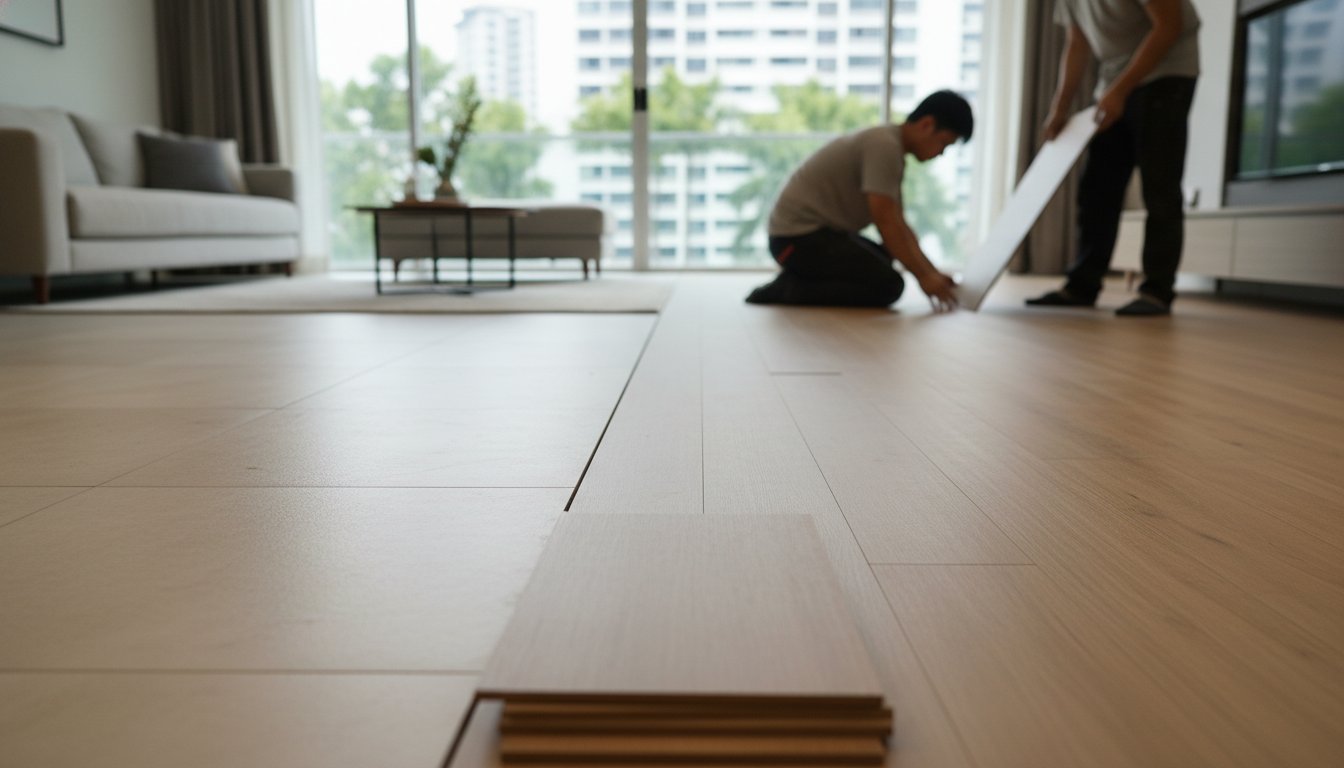
A vinyl flooring overlay on tiles is a sophisticated, non-invasive renovation technique where premium resilient planks are installed directly over your existing ceramic, porcelain, or homogenous flooring. Instead of using a jackhammer to remove old surfaces, installers lay a fresh, stylish layer on top. This “no-hacking” approach is the preferred solution for Singaporean homeowners looking to refresh HDB resale flats or condos without the stress of a full-scale demolition. It transforms a space in 48 hours rather than 14 days. By choosing a vinyl flooring overlay on tiles, you create a flawless foundation that feels warm underfoot while maintaining the structural integrity of the original floor.
Modern flooring has evolved far beyond the thin, adhesive-backed stickers of the 1990s. Today, we use Luxury Vinyl Resilient Floor (LVRF) and Stone Plastic Composite (SPC). These materials offer a premium finish that mimics natural wood or stone with stunning accuracy. While traditional Vinyl Composition Tile (VCT) paved the way for resilient flooring in commercial spaces, modern residential overlays prioritize comfort and high-end aesthetics for the home. This method is particularly popular in Southeast Asia, where hard tile floors are standard but often feel cold or dated.
The Anatomy of a Modern Overlay
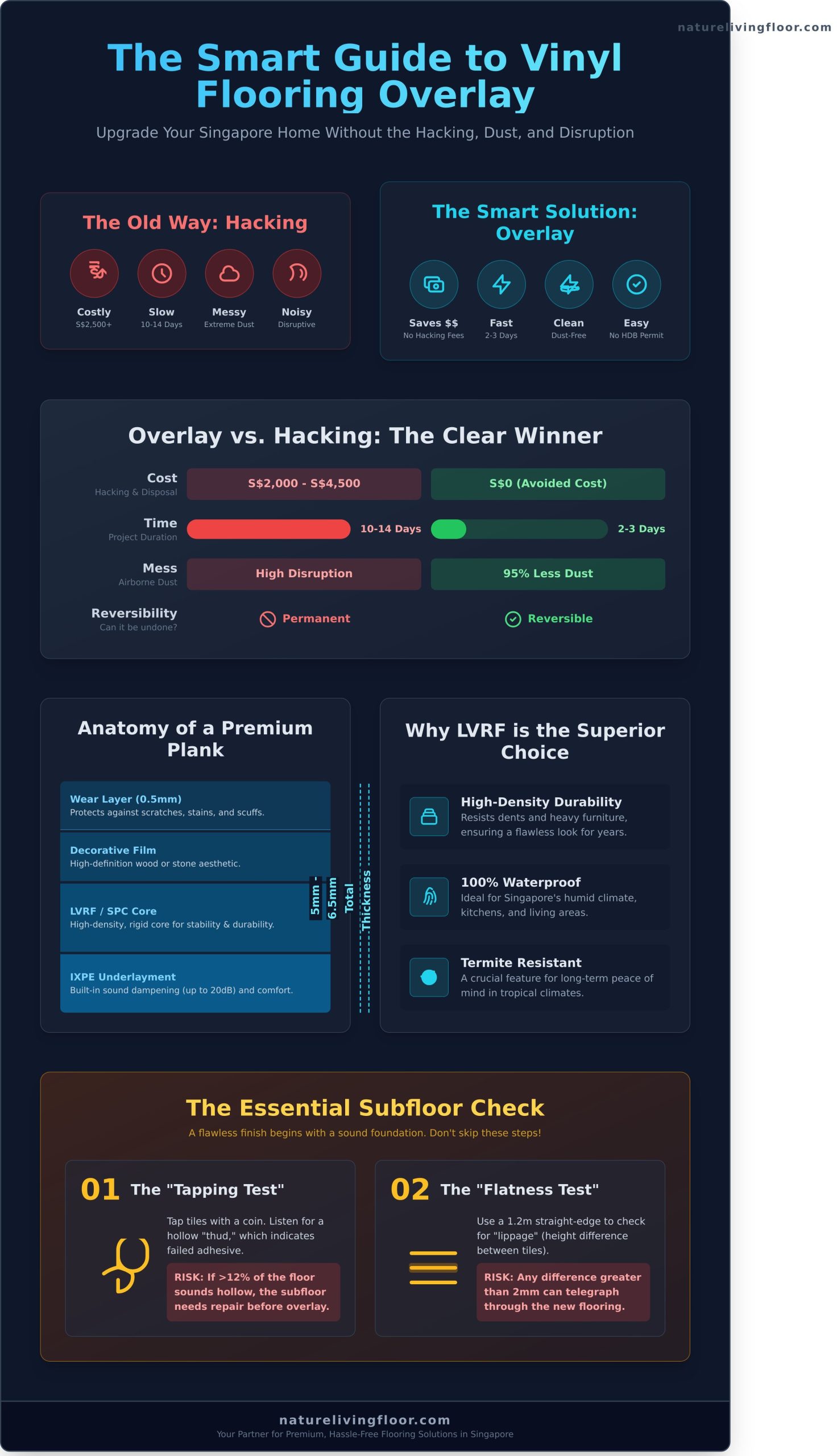
A high-quality vinyl flooring overlay on tiles consists of several engineered layers designed for long-lasting performance. The topmost wear layer, usually 0.5mm thick, protects against scratches and stains. Beneath this lies the high-definition decorative film that provides the elegant wood or stone look. The core, often made of SPC or LVRF, provides the plank’s rigid structure. Most premium options include a built-in IXPE underlayment. This layer is crucial; it dampens sound by up to 20 decibels and masks minor grout line imperfections. Total thickness typically ranges from 5mm to 6.5mm. This height is significant enough to feel sturdy but slim enough to avoid trimming most doors.
Overlay vs. Hacking: A Cost-Benefit Analysis
Choosing an overlay over traditional hacking offers immediate practical advantages. A standard 1,000 square foot HDB flat requires roughly 10 to 14 days for hacking, clearing debris, and re-screeding. An overlay project for the same area takes only 2 to 3 days. The financial savings are equally clear. Hacking and disposal fees in Singapore typically range from S$2,000 to S$4,500, depending on the tile type and labor. You skip these costs entirely with an overlay.
- Dust and Mess: Hacking generates 95% more airborne dust than an overlay installation.
- Reversibility: Overlays are “reversible” solutions. If you’re renting out a unit or want to preserve the original tiles for future buyers, the vinyl can be removed without damaging the subfloor.
- Regulatory Ease: You don’t need heavy-duty Hacking Permits from HDB for a simple overlay, which streamlines your renovation timeline.
This method isn’t just a shortcut; it’s a smart, durable investment. It provides a waterproof and termite-resistant surface that stands up to the humid Singaporean climate. You get the premium look of timber or marble without the high maintenance or the disruptive noise of a construction site. It’s the most efficient way to achieve a modern, elegant home interior while respecting your budget and your time.
The Essential Subfloor Check: Is Your Tile Ready for Overlay?
A flawless finish begins beneath the surface. While a vinyl flooring overlay on tiles offers a sophisticated transformation, its success relies entirely on the condition of your existing floor. You’re building a new lifestyle on an old foundation; that foundation must be sound. Before you select your premium planks, perform a thorough audit to ensure long-lasting performance. If your current tiles are structurally compromised, the new layer won’t hide those issues for long.
Start with the sound test. Walk across your room and tap individual tiles with a coin or a broom handle. A hollow “thud” suggests the adhesive underneath has failed. If more than 12% of your floor area sounds hollow, the risk of “popping” or buckling increases significantly. For those installing vinyl flooring over tile, ensuring every inch is bonded tightly to the concrete slab is the first step toward an elegant result. In Singapore’s humid climate, trapped air in hollow pockets can expand, leading to unsightly bulges in your new floor.
The 4-Point Stability Test
- Flatness: Use a 1.2-meter straight-edge to check for lippage. Any height difference between tiles exceeding 2mm can telegraph through your new floor, ruining the aesthetic.
- Cleanliness: Kitchens in older HDB flats often have layers of stubborn grease. You must strip away old wax and oils to ensure the underlayment remains stable and doesn’t slide.
- Soundness: Inspect for deep cracks. If a crack spans multiple tiles, it indicates structural movement that might cause your vinyl joints to separate over time.
- Dryness: Ground-floor units face rising dampness. Ensure moisture levels are below 3% to prevent mold growth beneath your beautiful new “solution.”
Solving Unevenness Without Hacking
You don’t always need a jackhammer to achieve a level surface. In older resale flats where tiles have settled unevenly, a high-quality self-leveling compound creates a smooth, glass-like base. This liquid solution fills deep 3mm grout lines and levels out dips without the dust and noise of a full renovation. It’s a premium way to prep your space for a vinyl flooring overlay on tiles while maintaining a clean home environment.
Modern Luxury Vinyl Rigid Flooring (LVRF) provides a built-in advantage for minor imperfections. These planks feature a stone-polymer composite core that remains incredibly stable. This rigid structure “bridges” small grout gaps, preventing the surface from dipping into the lines of the old tile. To ensure your subfloor meets the required standards, you can view our stylish flooring options and speak with our consultants about a professional site survey. Our team uses precision tools to measure lippage and moisture, ensuring your investment remains a stunning masterpiece. If your tiles are severely buckled or “popping” by more than 5mm, we’ll provide a clear assessment on whether a direct overlay is a safe, long-term choice for your home.
Choosing the Right Material: Why LVRF Elevates the Experience
Selecting the material for your home renovation is about more than just picking a color; it’s about investing in the perfect foundation for any space. While many homeowners consider basic PVC options, Luxury Vinyl Resilient Floor (LVRF) represents a significant upgrade in both engineering and everyday feel. Standard vinyl often relies on a flexible, thinner composition that can feel hollow. In contrast, LVRF features a high-density core that provides a solid, premium sensation underfoot, mimicking the weight and stability of traditional hardwood or stone.
In Singapore, where average humidity levels often reach 84%, traditional wood can warp and standard laminates might swell. LVRF is 100% waterproof and termite-proof, making it a non-negotiable solution for our tropical climate. These floors don’t just survive the humidity; they thrive in it. When planning a vinyl flooring overlay on tiles, you’re choosing a material that eliminates the need for hacking, saving you approximately S$800 to S$1,500 in demolition costs for a standard 3-bedroom HDB flat. Beyond the cost savings, the structural integrity of LVRF ensures that your new floor remains flawless for decades.
Safety and health are central to modern living. Premium LVRF options are rated with low Volatile Organic Compound (VOC) emissions, often carrying the FloorScore certification. This ensures the air your family breathes is free from harmful chemicals. According to the World Floor Covering Association installation guidelines, the success of any overlay depends on the quality of the subfloor and the material’s ability to mask imperfections. LVRF’s rigid construction is specifically designed to prevent “telegraphing,” which is when the lines of your old tile grout show through the new surface.
Luxury Vinyl Resilient Floor (LVRF) Deep Dive
LVRF is engineered for high-traffic households. It features a 0.5mm heavy-duty wear layer that protects against scratches from heavy furniture and pet claws. For homes with elderly residents or young children, the R10 slip-resistance rating provides essential peace of mind, significantly reducing the risk of falls on wet surfaces. You’ll also notice the “Quiet Luxury” effect immediately. The integrated acoustic underlay can reduce impact noise by up to 20 decibels, silencing the “clicking” sound often associated with cheaper plastic floors. This creates a calm, sophisticated atmosphere in every room.
Visualizing Your Space
Achieving a cohesive interior design starts with the right aesthetic foundation. Wood-look LVRF planks create a warm, inviting atmosphere that serves as the centerpiece for modern Scandi or Industrial styles. You can complete your space by matching these flooring tones with WPC wall panels, creating a seamless transition from floor to wall that adds depth and texture to your living room.
Don’t leave your renovation to chance. Use our Product Visualizer to see exactly how a vinyl flooring overlay on tiles will transform your specific room. This tool allows you to upload a photo of your current space and swap between classic oak planks or sophisticated herringbone patterns in real-time. It’s the most reliable way to ensure your chosen palette complements your existing furniture before you commit to a purchase. Explore our curated collections to find the elegant solution that fits your lifestyle.
Practical Logistics: Doors, Skirting, and Transitions
A successful vinyl flooring overlay on tiles depends on managing millimeters with precision. Adding a 5mm to 7mm layer of premium SPC vinyl might seem insignificant; however, it changes the geometry of your entire living space. This height increase affects how doors swing and how the floor meets your walls. A well-planned installation ensures the result feels like a permanent, solid foundation rather than a temporary cover-up. Modern SPC cores used by Nature Living Floor boast a density of 2,100 kg/m3. This high density, combined with the rigid tile base underneath, ensures the floor feels incredibly stable and quiet underfoot.
Door Trimming and Clearances
Most internal wooden doors in Singaporean homes feature a standard clearance gap of 3mm to 5mm. Because a high-quality vinyl flooring overlay on tiles adds at least 5mm of height, your doors will likely require professional adjustment. Installers use specialized undercut saws to remove approximately 8mm to 10mm from the bottom of bedroom doors. This creates a clean, functional swing without dragging. You must exercise caution with fire-rated main entrance doors. SCDF regulations are strict regarding modifications to fire-rated sets. If your overlay compromises the operation of a fire door, you may need a specialized transition strip or a “drop-down” solution instead of trimming the door itself. Addressing these clearances during your initial site survey prevents unexpected S$200 repair bills for damaged door frames later.
The Finishing Touch: Skirting and Trims
Achieving a flawless junction between the floor and wall defines the overall quality of your renovation. You have two primary paths for a sophisticated finish. The first involves removing existing timber skirting to install new, matching PVC skirting. This creates a seamless, modern profile that’s 100% waterproof and termite-resistant. The second option uses “L-profiles” or “beading” to cover the mandatory 5mm expansion gap along the perimeter if you prefer to keep your original skirting intact. Both methods ensure the vinyl flooring overlay on tiles looks integrated rather than added on.
- Aluminum Trims: Use these for a sleek, contemporary edge at transitions between the living room and tiled wet areas like toilets.
- End Caps: These provide a clean, professional stop at sliding balcony tracks or floor-to-ceiling windows.
- T-Mouldings: Essential for creating smooth flows between different rooms while allowing for the natural material expansion that prevents buckling.
A premium installation isn’t just about the planks you choose. It’s about how those planks interact with the existing architecture of your home. By choosing high-quality aluminum transitions and matching skirting, you elevate the entire aesthetic from a simple renovation to a stunning masterpiece. These small details ensure the transition from your bedroom to the hallway feels consistent and premium. Don’t overlook the importance of matching the trim color to your floor choice to maintain a unified design language throughout the unit.
Ready to transform your home with a professional finish? Start your project with a professional consultation to ensure every door and transition is handled with expert precision.
Nature Living Floor: Premium Solutions for Your Overlay Project
Choosing the right material for a vinyl flooring overlay on tiles is about more than just aesthetics; it’s a strategic investment in your home’s long-term value. Our Nature Living Promise ensures every plank balances visual elegance with high-performance durability. We’ve engineered our collections specifically for the high-humidity environments found in Singapore, where moisture levels often fluctuate between 60% and 90% daily. This focus on local conditions ensures your floor remains stable and beautiful for decades.
Our Latest Vinyl Resilient Flooring (LVRF) collection is 100% waterproof and termite-proof. In tropical climates, these features aren’t optional extras. They’re essential protections against the common issues that plague traditional wood floors. By utilizing a high-density core, our LVRF resists the warping and swelling that often occur in less specialized materials. This makes it the ideal choice for homeowners who want the warmth of wood without the high-maintenance requirements of natural timber.
We believe the floor is the “perfect foundation” for any space. Our expert consultants help you select the right thickness, typically a robust 5mm for residential high-traffic areas, to ensure a flawless vinyl flooring overlay on tiles. This precision prevents “telegraphing,” a common issue where the grout lines of the underlying tiles become visible on the surface over time. We ensure your new surface is smooth, level, and incredibly resilient underfoot.
To create a truly cohesive interior, we offer designer WPC wall panels that complement our flooring series. These panels allow you to extend sophisticated textures from the ground up, creating a seamless, modern masterpiece. Whether you’re looking to create a feature wall or a full-room wrap, our wall solutions provide the same durability and water resistance as our floors, ensuring a uniform look that stands the test of time.
Why Designers Choose Our LVRF
Designers prioritize our LVRF for its sophisticated textures and hyper-realistic wood grains. Each plank in our 2024 collection mimics the tactile feel of natural timber, providing a premium aesthetic that elevates any room. We maintain a strict commitment to non-toxic, eco-friendly materials, ensuring all products are formaldehyde-free and meet low VOC standards for healthy indoor air. With a regional presence in Singapore, Klang, and Yangon, we bring localized expertise to every project, understanding the specific architectural needs of Southeast Asian homes.
Start Your Transformation Today
Your journey toward a more elegant home begins with a tactile experience. We invite you to visit our galleries in Yishun or Klang to see the 22 unique wood-grain patterns in our current collections. You can request physical samples to test against your existing decor and lighting, ensuring the color and texture are perfect for your specific layout. This hands-on approach ensures you feel the premium quality of our resilient flooring before your installation begins. Complete your space with our premium flooring solutions.
Elevate Your Home with a Seamless Foundation
Choosing a vinyl flooring overlay on tiles is the smartest way to achieve a premium aesthetic without the S$5,000 average cost of traditional hacking and disposal. Successful renovations depend on two critical factors: a level subfloor and high-performance materials. By ensuring your existing tiles are secure and opting for LVRF, you create a surface that’s both waterproof and termite-proof. These non-toxic solutions are trusted by top interior designers across Singapore and Malaysia to deliver long-lasting performance in our humid climate. Don’t overlook the logistics of door trimming and skirting; these small details ensure a flawless, professional finish that lasts for years. It’s time to stop settling for dated floors and start building a sophisticated environment. Our collections offer the perfect foundation for any modern lifestyle, blending durability with unmatched elegance. Your dream space is closer than you think. Take the first step toward a stunning masterpiece today.
Discover the Perfect Foundation: Explore Our LVRF Collection
Frequently Asked Questions
Can I overlay vinyl on tiles if some tiles are hollow?
You shouldn’t overlay vinyl on hollow tiles because they lack the structural integrity to support a new layer. If more than 5% of your floor tiles sound hollow when tapped, they’re likely to shift or crack under pressure. You’ll need to repair these specific areas first to ensure a flat, stable foundation for your premium flooring.
How much does it cost to overlay vinyl on tiles in Singapore for 2026?
In 2026, a professional vinyl flooring overlay on tiles in Singapore typically costs between S$3.80 and S$7.50 per square foot. This price range covers high-quality 5mm SPC materials and expert labor. For a standard 92 square meter 4-room HDB flat, expect a total investment of approximately S$3,700 to S$7,300 depending on the specific series you choose.
Will the floor height increase significantly with a vinyl overlay?
Your floor height will increase by only 5mm to 7mm including the integrated underlayment. This small change is usually negligible, but it’s important to check your door clearances. If your door gap is less than 6mm, a professional installer will trim the bottom of the door to ensure a smooth, effortless swing across your new elegant surface.
Is vinyl flooring overlay waterproof enough for kitchens?
High-quality vinyl flooring overlay on tiles is 100% waterproof and perfectly suited for modern Singaporean kitchens. These premium solutions feature advanced interlocking systems that prevent moisture from reaching the subfloor. You can enjoy a sophisticated wood or stone look without worrying about spills or humidity affecting the long-term performance of your space.
Do I need to remove my existing skirting before overlaying vinyl?
You don’t strictly have to remove existing skirting, but doing so creates a much more flawless and sophisticated finish. If you keep the old skirting, installers must use PVC beading to cover the expansion gap. This often looks less refined. Removing it allows the vinyl to sit flush against the wall for a truly premium aesthetic.
How long does a vinyl overlay typically last on top of tiles?
A premium vinyl overlay typically lasts 20 to 25 years in a residential setting when maintained correctly. Choosing a product with a 0.5mm wear layer ensures it stands up to heavy foot traffic and daily wear. This makes it a smart, long-lasting investment that serves as the perfect foundation for your home’s interior design.
Can I use a vinyl overlay in the bathroom?
We don’t recommend vinyl overlays for wet bathroom areas or shower zones due to constant water exposure and drainage requirements. While the material itself is waterproof, water can eventually seep through the perimeter joints in high-moisture environments. For dry powder rooms, however, a vinyl overlay provides a stylish and comfortable solution that updates the space instantly.
What is the difference between SPC and LVRF for an overlay project?
SPC (Stone Plastic Composite) features a rigid core that’s 100% waterproof and highly resistant to temperature changes. LVRF (Luxury Vinyl Resilient Flooring) is more flexible and offers a softer feel underfoot. For an overlay project, SPC is the superior choice because its rigidity prevents “telegraphing,” ensuring grout lines from the old tiles don’t show through the new surface.


